
Table of Contents:
- What Has Changed in the DMV Point System
- Why These Updates Matter for Everyday Drivers
- Common Misunderstandings About Points & Penalties
- How Gannes & Musico, LLP Can Help You Navigate the New System
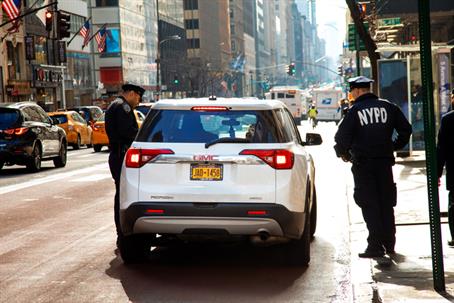
A driver gets stopped on the way home for going a few miles over the limit in a work zone. For years, many New Yorkers would have handled that kind of traffic ticket the same way: pay the fine, take the points, get back to life.
As of February 16, the math changes. The New York State’s updated point system increases point values for certain violations, assigns points to some that previously carried none, and keeps points on your record longer. An ordinary citation can now bring drivers closer to license suspension faster than it once did.
State officials describe the update as part of a broader effort to curb dangerous driving and focus enforcement on repeat offenders. For drivers, the immediate issue is how quickly points can stack up under the new system.
What Has Changed in the DMV Point System
Officials with the New York State Department of Motor Vehicles (DMV) remind motorists that the updated point system alters how violations are valued and how long they count against you. Below are the changes the DMV highlighted as key:
- Maximum Points for Impaired Driving & Unlicensed Operation. Convictions for driving while intoxicated or operating a vehicle without a valid license, which previously did not add any points, now result in 11 points on your record.
- Work Zones, School Buses, & Following Too Closely. Failing to stop for a school bus or speeding in a construction zone now usually results in 8 points. Tailgating has increased from 4 points to 5 points.
- New Points for Common Everyday Violations. Certain equipment violations (such as broken taillights) can now add 1 point, illegal U-turns and obstructing traffic carry 2 points, and failure to move for emergency vehicles results in a 3-point penalty.
- Points for Violations That Previously Carried None. Speed contests and races now carry 5 points, and loaning a vehicle to someone with a suspended or revoked license can now add 5 points.
- Longer Look-Back Period. Points now stay on your record for 24 months instead of 18 months. That extended window makes it easier for multiple violations over time to accumulate toward suspension thresholds.
- Lower Threshold for Suspension Review. The prior suspension standard of 11 points in an 18-month period has been replaced by a lower bar. Drivers can now face administrative action if they accumulate 10 points within 24 months.
Why These Updates Matter for Everyday Drivers
Drivers who once saw a three-point or five-point ticket as routine now face a system that holds onto violations longer and assigns heavier values to several common offenses. A ticket that felt manageable in the past can carry consequences that linger well beyond the court date.
The extended look-back period also increases the chance that separate incidents will overlap. A driver who receives one ticket this spring and another later in the year may find both still counting at the same time, pushing them closer to DMV scrutiny. Insurance premiums often rise as point totals increase, and for drivers who depend on a clean record for work, the impact can reach into employment, commuting, and everyday responsibilities.
Common Misunderstandings About Points & Penalties
Many drivers think of points as a minor detail, separate from the fine or the court appearance. Under the updated system, points can carry real weight, since they can lead to DMV action against your license and may affect how insurers evaluate risk.
Another common mistake involves paying a ticket quickly to get it over with. Payment usually functions as a guilty plea for most violations, which locks in the points tied to that conviction. With higher point values now attached to several offenses, that snap decision can carry more lasting consequences than drivers expect.
How Gannes & Musico, LLP Can Help You Navigate the New System
Sorting out how a ticket affects your record can get complicated fast when point values change and points stay “active” longer. Gannes & Musico, LLP focuses on traffic violations and offers free case evaluations so drivers can understand how the updated point system could affect their current driving record.
Here’s how we help drivers make sense of what comes next:
- Start with a free case evaluation. We discuss the ticket you received, what a conviction can mean under the updated point system, and what response options typically exist in New York traffic court, based on the facts you share.
- Bring deep experience to the case review. We have provided over 30 years of aggressive traffic defense and handle a high daily volume of cases, which can help when deadlines, procedures, and courtroom expectations move quickly.
- Assess point and suspension risk. We can review your recent driving history, explain how the look-back period works in practice, and flag where a ticket could place you in relation to DMV action thresholds.
- Help you prepare the right materials up front. Helpful items include the ticket, any DMV notices about points or potential suspension, and any available driving abstract, plus details about prior tickets or convictions.
- Fight traffic tickets. We focus on challenging the allegation, the evidence, and the way the ticket was issued, with the goal of protecting your driving record and minimizing point exposure where the law and facts allow.
Our team handles traffic defense every day and have secured thousands of not guilty verdicts over the years. That depth of experience helps us explain how the updated point system may affect your traffic ticket, your driving record, and the decisions in front of you.
If you have questions about a recent ticket or are concerned about how many points are already on your record, call (877) 803-2603 to speak with our team or contact us online to schedule a free case evaluation.