
A Recent Appeal Demonstrates Why Every Summons Deserves Careful Legal Review
New York City has taken an increasingly aggressive approach to combating illegal dumping. In addition to enforcement efforts by the Department of Sanitation (DSNY), New York City has implemented programs that encourage private citizens to report suspected violations. In some situations, individuals who document illegal dumping activity may even be eligible to receive a portion of the resulting fine.
While these programs are intended to deter unlawful waste disposal, a recent OATH Appeals Division decision highlights an important reality: enforcement agencies must still prove that the alleged conduct violates the law being charged.
In Appeal No. 2600266, attorney Olivia of Gannes & Musico, LLP successfully appealed two summonses for illegal dumping issued by DSNY. The Appeals Division ultimately reversed both violations and dismissed the case entirely.
If you are facing a summons, violation, or administrative enforcement action, call (877) 803-2603 or contact us online to discuss your options with our legal team.
Understanding NYC's Illegal Dumping Enforcement Efforts
Illegal dumping remains a major concern throughout the five boroughs. To address the problem, New York City allows residents to report suspected violations and submit evidence for investigation.
Reports frequently include:
- Video recordings. Citizens may capture footage of individuals disposing of debris or waste materials.
- Photographic evidence. Images are often used to identify vehicles and individuals involved.
- License plate information. Vehicle registrations can help investigators identify alleged violators.
- Witness complaints. Reports from private citizens may trigger enforcement actions.
These programs can generate valuable evidence, but the existence of a video or complaint alone does not automatically establish a violation under a particular law.
The Summonses at Issue
The case arose from two summonses issued under New York City Administrative Code § 16-119, the City's illegal dumping statute.
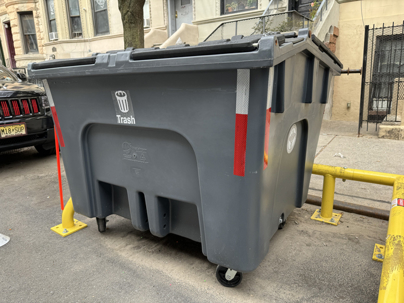
According to the allegations, a complainant recorded footage showing materials being placed into a dumpster located on private property in Staten Island. The materials allegedly included bags of waste and pieces of wood.
At the hearing, DSNY presented evidence that included:
- Videos submitted by the complainant. The footage allegedly showed debris being deposited into a dumpster.
- Still photographs. Images captured from the video were introduced as evidence.
- Testimony from the issuing officer. The officer testified regarding the investigation and subsequent vehicle stop.
The Department argued that the conduct constituted illegal dumping under Code § 16-119. After an initial hearing, the violations were sustained.
An appeal followed.
The Central Question on Appeal
The appeal did not focus primarily on whether materials were placed into the dumpster. Instead, the dispute centered on a more fundamental legal question:
Does New York City's illegal dumping statute apply when debris is placed inside a dumpster?
The defense argued that Code § 16-119 was intended to prohibit dumping materials in locations such as:
- Sidewalks
- Streets
- Lots
- Parks
- Public places
- Waterways
- Other similar open areas
According to the appeal, placing waste inside a dumpster is materially different from depositing debris onto open property or public spaces.
While other sanitation regulations may govern unauthorized use of dumpsters under certain circumstances, the defense argued that the specific statute charged in this case did not apply.
Why the Appeal Was Successful
After reviewing the record, the OATH Appeals Division reversed both violations and dismissed the summonses. The appeal centered on whether the conduct alleged by the Department of Sanitation fell within the scope of the specific law charged. Although the hearing officer initially sustained the violations, the Appeals Division ultimately determined that the law did not support the enforcement action under the circumstances presented.
This outcome highlights an important reality about administrative enforcement cases. A violation cannot stand simply because an agency believes improper conduct occurred. The government must also demonstrate that the facts fit the requirements of the specific statute being enforced.
Successfully identifying and challenging these legal issues often requires a detailed understanding of statutory interpretation, administrative procedures, and appellate practice. What may appear to be a straightforward violation can sometimes involve significant legal defenses that are not immediately apparent.
Why Administrative Appeals Are a Smart Move
Many people assume that an unfavorable hearing decision is the end of the process. In reality, an appeal may provide an opportunity to challenge legal errors, improper interpretations of the law, or other issues that affected the outcome of the case.
Administrative appeals are often highly technical. Success may depend on a careful review of the applicable law, prior decisions, hearing records, and procedural requirements. For that reason, it is important to have experienced legal counsel evaluate the circumstances of a case before deciding whether to pursue an appeal.
The dismissal of both summonses in this matter demonstrates that hearing decisions are not always the final word. When significant legal issues are present, an appeal can provide a meaningful opportunity to seek a different result.
Why This Decision Matters
Although this case involved an illegal dumping allegation, the broader lesson extends far beyond sanitation enforcement.
Government agencies must prove more than mere evidence. They must also establish that the conduct alleged satisfies every element of the specific law being charged.
Legal challenges often focus on issues such as:
- Whether the correct statute was used
- How the law should be interpreted
- Whether the facts fit within the statute's language
- Whether prior decisions actually support the government's position
- Whether enforcement agencies exceeded the scope of their authority
These legal questions frequently determine the outcome of a case.
Appeals Can Be Powerful Tools for Challenging Violations
Many individuals assume that once a hearing officer rules against them, the case is effectively over. However, administrative appeals can provide an important opportunity to challenge legal errors and incorrect interpretations of the law.
Successful appeals often involve:
- Identifying statutory interpretation issues
- Challenging unsupported legal conclusions
- Examining whether the precedent was applied correctly
- Reviewing whether the evidence supports the violation charged
In this case, the Appeals Division ultimately found that the law itself did not support the violations, resulting in a complete dismissal of both summonses.
How Gannes & Musico, LLP Fights for Clients
The successful appeal demonstrates the value of thoroughly analyzing the facts and the law. By challenging the Department's interpretation of the statute, we secured the dismissal of both summonses and eliminated the penalties assessed against the respondents.
Our attorneys understand that enforcement agencies do not always get it right. Whether a case involves administrative violations, traffic offenses, or criminal allegations, careful legal analysis can reveal defenses that may not be immediately apparent.
Experienced Representation Can Make a Difference
Cases involving administrative violations, traffic matters, and criminal allegations often present complex legal issues that are not immediately obvious from the face of a summons. A thorough review of the law, the evidence, and the procedural history can uncover defenses that significantly impact the outcome of a case.
The attorneys at Gannes & Musico, LLP have more than 30 years of combined experience representing clients facing a wide range of government enforcement actions. Our team is committed to helping clients understand the legal process, protect their interests, and pursue the strongest defense available.
Have You Received a Summons or Been Accused of a Violation?
Receiving a summons does not necessarily mean the government has proven its case. Administrative violations, traffic offenses, and criminal charges may all involve legal defenses that deserve careful evaluation.
The attorneys at Gannes & Musico, LLP are prepared to provide an aggressive defense against a wide range of traffic violations and criminal charges.
Call (877) 803-2603 or contact us online to discuss your situation with our legal team.